

What No One Tells You Before Starting a Kitchen Remodel
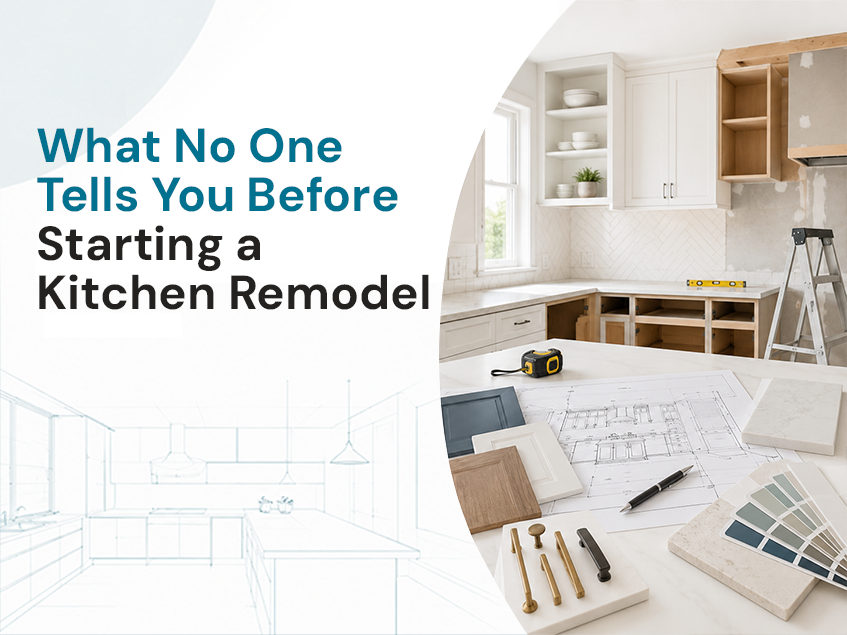
A kitchen remodel:
- Transforms the most-used room in your home
- Increases property value
- Improves daily functionality
Yet many homeowners begin the process without fully understanding the process, and focus on:
- Colors
- Countertops
- Cabinet styles
The reality is that successful kitchen remodels depend on:
- Careful planning
- Realistic expectations
- Dozens of decisions that aren't always obvious at the start
Before you begin tearing out cabinets or collecting design inspiration, here are the things no one tells you about starting a kitchen remodel.
Your Budget Will Need More Flexibility Than You Think
Many homeowners create a remodeling budget based on visible finishes, like:
- Kitchen cabinets
- Countertops
- Appliances
- Flooring
However, hidden costs often emerge once construction begins. Common unexpected expenses are:
- Electrical upgrades
- Plumbing modifications
- Structural repairs
- Drywall replacement
- Permit fees
- Ventilation improvements
- Water damage remediation
Industry professionals often recommend setting aside an additional contingency fund.
Cabinet Decisions Impact Everything Else
Homeowners often spend significant time choosing kitchen countertops and backsplashes while underestimating the importance of cabinetry. Kitchen cabinets influence:
- Layout functionality
- Storage capacity
- Appliance placement
- Countertop dimensions
- Project budget
- Overall design style
Lead Times Can Delay Your Entire Project
One of the biggest surprises during a kitchen remodel is how long certain materials can take to arrive. Lead times range from several weeks to months for:
- Custom cabinetry
- Specialty countertops
- Imported tile
- Appliances
Material delays quickly shift installation schedules. Working with a cabinet supplier that maintains local inventory can:
- Reduce project timelines
- Avoid costly delays
Before placing any orders, ask suppliers:
- What products are currently in stock?
- How quickly can you deliver cabinets?
- Are replacement parts readily available?
Your Current Layout May Not Be the Best Layout
While maintaining the current layout can reduce costs, it may also limit the kitchen's functionality. Before finalizing plans, evaluate:
- Traffic flow patterns
- Work triangle efficiency
- Pantry storage needs
- Appliance placement
- Seating requirements
- Island functionality
More Storage Is Almost Always Worth It
When planning your cabinetry, think beyond standard base and wall cabinets. Popular storage solutions include:
Pantry Cabinets
Tall pantry cabinets provide dedicated food storage and help reduce countertop clutter.
Deep Drawer Bases
Deep drawers often offer better accessibility than traditional lower cabinets.
Pull-Out Organizers
Pull-out shelves make it easier to access:
- Pots
- Pans
- Small appliances
Waste Centers
Integrated waste systems keep the kitchen cleaner and more organized.
Temporary Kitchens Are Harder Than Expected
Many homeowners underestimate how disruptive a kitchen remodel can be. For several weeks, you may lose access to:
- Your stove
- Dishwasher
- Sink
- Refrigerator
- Storage space
Setting up a temporary kitchen beforehand can make daily life much easier. Consider including:
- Microwave
- Mini refrigerator
- Coffee station
- Portable cooktop
- Paper goods
- Basic cookware
Trends Come and Go Quickly
While it's perfectly fine to leverage current styles, consider balancing trends with timeless design choices. Features that consistently perform well over time are:
- Shaker-style cabinets
- Neutral cabinet colors
- Quality wood construction
- Durable countertop materials
- Functional storage solutions
Appliance Specifications Matter Earlier Than You Realize
Many remodeling delays occur because appliance selections happen too late. Many key details depend on exact appliance specifications, including:
- Cabinet dimensions
- Electrical locations
- Plumbing rough-ins
- Ventilation systems
Before cabinet orders are finalized, confirm:
- Refrigerator dimensions
- Range size
- Hood requirements
- Dishwasher specifications
- Microwave placement
Making changes after cabinets are manufactured can:
- Increase costs
- Create installation delays
Communication Is Just as Important as Design
Successful remodels typically involve:
- Clear project timelines
- Frequent progress updates
- Written change orders
- Material tracking
- Defined responsibilities
Whether you're working with a contractor, designer, or cabinet supplier, maintaining clear communication keeps projects on schedule and within budget.
Quality Cabinets Deliver Long-Term Value
Many homeowners focus heavily on upfront cabinet pricing without considering long-term performance. Well-built cabinets can provide:
- Better durability
- Improved storage functionality
- Stronger hardware performance
- Easier maintenance
- Greater resale value
When evaluating cabinetry, ask about:
- Cabinet box construction
- Plywood versus particleboard materials
- Soft-close hardware
- Drawer box construction
- Finish durability
- Warranty coverage
Why Homeowners Choose Kade
At Kade Cabinets, homeowners have access to high-quality kitchen cabinets designed to balance:
- Style
- Durability
- Functionality
With a wide range of popular door styles, finishes, and storage solutions, Kade Cabinets simplifies one of the most important decisions in the remodeling process.
Major Takeaways
A kitchen remodel involves much more than selecting finishes and creating a beautiful space. Hidden costs, lead times, storage planning, appliance coordination, and cabinet selection all play major roles in your project's success.
By understanding these often-overlooked realities, you can avoid common frustrations, make more informed decisions, and create a kitchen that looks great and functions beautifully for years to come.
FAQs
-
How much should I budget for a kitchen remodel?
The cost of a kitchen remodel varies based on the size of the space, the quality of materials, and the scope of work.
-
What should I do before starting a kitchen remodel?
Before beginning a kitchen remodel, establish a realistic budget, identify your priorities, gather design inspiration, select your kitchen cabinets, and create a project timeline.
-
How long does a kitchen remodel typically take?
Most kitchen remodels take anywhere from six to twelve weeks before construction begins.
-
Why are kitchen cabinets so important in remodeling?
Kitchen cabinets serve as the foundation of your kitchen design, influencing layout, storage, appliance placement, and overall budget.
-
Should I choose custom, semi-custom, or stock cabinets?
The best option depends on your budget, timeline, and design goals. Stock cabinets offer faster delivery and affordability; semi-custom cabinets provide more flexibility; and custom cabinets allow for complete design personalization but typically require longer lead times.
Recent Articles

 30 August,2026
Looking for Schrock Cabinets in Georgia? Here's What We Carry Instead
Looking for Schrock Cabinets in Georgia? Explore quality cabinet alternatives, available styles, and options for your next kitchen project.
Read More 28 August,2026
Kemper Cabinets: Door Styles, Finishes, and Pricing from a Georgia Dealer
Explore Kemper Cabinets, including door styles, finishes, wood species, customization options, pricing, and how to get a quote from a Georgia dealer.
Read More 21 August,2026
Wellborn Cabinets Review: Construction, Warranty, Etc.
Read our Wellborn Cabinets review covering construction, cabinet quality, warranty, customization, lead times, and where Wellborn Cabinets are made.
Read More