

Bathroom Vanities in Cumming, GA: Sizes, Materials, Costs and Lead Times
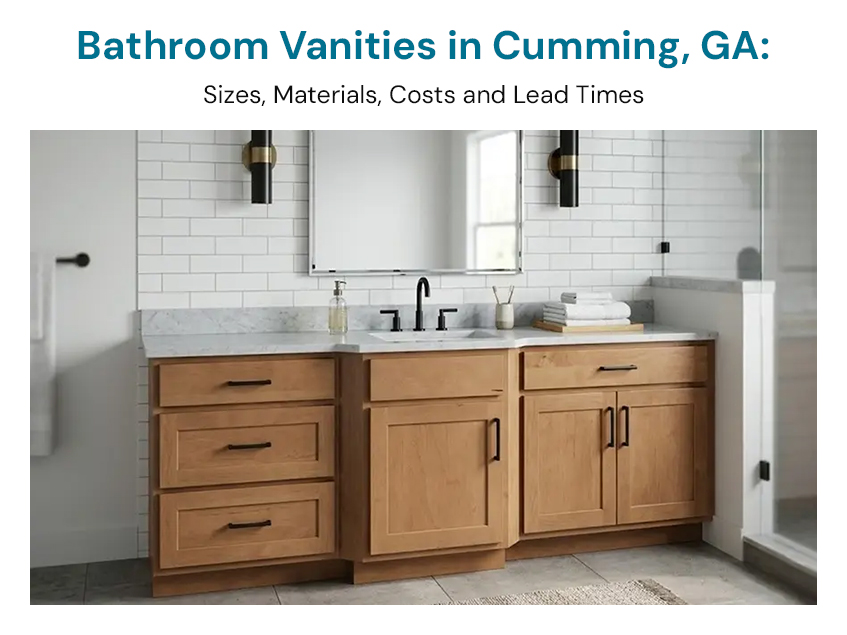
A bathroom vanity does more work than almost any other piece in your home. It holds your sink, hides your plumbing, stores everything from towels to hair tools, and sets the style for the whole room. Choosing the wrong size or material is expensive to fix later, so it helps to understand the options before you shop.
This guide covers what we see most often from homeowners and contractors around Cumming and North Georgia: sizes, heights, materials that handle our humidity, layouts, countertops, costs, and timelines.
Standard Vanity Sizes (and When to Go Bigger)
Vanities are sold in width increments, most commonly 24", 30", 36", 48", 60", 72", and 84". Depth is typically 21" for standard models, with slimmer 18" options for tight rooms.
- 24"–36": Powder rooms, hall baths, and small guest baths. A 30" or 36" vanity is the most common choice for secondary bathrooms.
- 48": A comfortable single-sink size with room for real drawer storage. It works well in mid-sized hall baths and smaller primary baths.
- 60": The usual dividing line. Most 60" vanities come as either a single sink with extra counter space or a double sink.
- 72"–84": Primary bathrooms with room for two full basins and generous storage.
60" double or 48" single? If two people use the bathroom at the same time every morning, a 60" double is worth considering. But a double sink on 60" leaves each person only about 24" of space. Many couples end up preferring a 60" single sink with a large center counter, or a 72" double with real elbow room. If the wall is only 48" to 54", a 48" single is the better choice.
Measure the wall, then subtract clearance for door swings, trim, and any toilet or tub alongside. Allow at least 30" between the sink centerline and any side wall or fixture, and plan for a 21" clear walking area in front of the vanity.
Height: Standard 32" vs. Comfort 36"
Older vanities typically stand 30"–32" tall. Newer "comfort height" models are 34"–36", close to kitchen counter height. If you are tall, have back or knee issues, or want to stop bending over the sink, 36" is noticeably easier. For children's baths or a home that will be shared with kids, a standard 32" height is more practical. Keep in mind that the countertop and sink add height, so check the total finished measurement, not just the cabinet.
Materials That Hold Up in a Georgia Bathroom
North Georgia's humidity is hard on bathroom cabinetry. Showers, poor ventilation, and summer moisture can swell and warp the wrong materials. Here is what to look for.
- Plywood box construction: Plywood tolerates moisture swings better than particleboard. If water gets in, plywood is less likely to crumble or swell at the seams.
- Solid wood or hardwood frames and doors: These look great but can move with humidity, so they need a good sealed finish.
- Moisture-rated finishes: A durable factory finish seals the surface and the edges. Check inside the cabinet and around the sink opening, since that is where leaks and splashes start.
- What warps: Thin MDF or particleboard with unsealed edges, low-quality laminate that peels near sinks, and any door left in a bathroom without a working exhaust fan.
Whatever you buy, protect it. Run the exhaust fan during and after showers, wipe up standing water around the sink, and fix slow drips under the basin right away.
Layout Styles: Single, Double, Floating, and Freestanding
- Single sink: The simplest and most affordable choice. It leaves more counter and drawer space.
- Double sink: Best for shared primary baths where the wall is long enough. It needs two sets of plumbing, so budget accordingly.
- Floating (wall-mounted): Makes a small bathroom feel larger and makes floor cleaning easier. The wall must be properly reinforced to carry the weight, and you lose some storage.
- Freestanding: The traditional choice, with a full base that sits on the floor. It offers the most storage and the easiest installation, and it hides plumbing and uneven flooring.
Countertops and Sink Cut-Outs
Many vanities are sold with a top, but you can also buy the cabinet alone and pair it with a countertop of your choice. Quartz, granite, and marble are common stone options, and each has its own care needs. Before you order, confirm these details:
- Sink type: Undermount, drop-in, and vessel sinks all need different cut-outs. Undermount sinks need a stone or solid-surface top.
- Faucet holes: Single-hole, 4" centerset, and 8" widespread faucets need different drilling. Make sure the top matches your faucet.
- Backsplash: Decide whether you want a standard 4" splash or a taller one, since it affects both the look and how easy the wall is to clean.
- Overhang and edge profile: Check that the top fits your cabinet depth and any wall-to-wall dimensions.
Ordering the top and the cabinet together avoids the mismatches that delay installs.
Price Bands: RTA vs. Assembled
Vanity pricing varies widely, but most fall into three rough bands:
- Entry level: Smaller RTA (ready-to-assemble) vanities and basic stock models, good for guest baths and budget remodels.
- Mid-range: Plywood-box construction, soft-close hardware, and more finish options, usually in 36"–60" sizes.
- Premium: Larger double-sink units, furniture-style designs, and higher-end finishes or tops.
RTA vs. assembled: RTA vanities arrive flat-packed and cost less to ship and store. They suit homeowners who want to save and are comfortable assembling, or contractors who will assemble on site. Assembled vanities cost more up front but arrive ready to set, which saves labor and reduces the chance of an alignment error. Contact us to compare exact pricing for the models you like, since costs change by style, size, and top.
Lead Times
Timelines depend on whether you choose an in-stock vanity, an RTA model, or a special-order piece. In-stock and RTA options usually move fastest. Special-order sizes, finishes, or custom tops can take longer, as can stone tops that need templating. Your designer will give you a clear schedule once your selections are final. If your bathroom is part of a larger remodel, order early and have your plumber and countertop fabricator ready to go.
Shopping for Bathroom Cabinets in Cumming
If you are searching for a bathroom cabinet company in Cumming, it helps to see products in person. Kade Cabinet Co. has a showroom at 460 Brannon Road, Suite 103, Cumming, GA 30041, serving homeowners, builders, and contractors across North Georgia and the greater Atlanta area.
Here is how we can help:
- Showroom visit: See finishes, door styles, and construction up close. Appointments are recommended so a designer can give you dedicated time, and walk-ins are welcome too.
- Measuring and planning: Our team helps you confirm sizes, clearances, and layout before you order.
- Design support: We offer a complimentary design consultation to help you choose the right vanity and storage.
- Installation: Our professional installation team can handle the fit and finish, with after-care support once the job is done.
Contractors are welcome too. If you are looking for a bathroom cabinet contractor in Cumming, we can supply vanities for your projects and help coordinate ordering and delivery.
Frequently Asked Questions
-
What size bathroom vanity do I need?
Measure your wall width first, then leave clearance for door swings, trim, and nearby fixtures. A 30" or 36" vanity suits most hall baths and powder rooms. A 48" vanity works well as a single-sink option in mid-sized baths. A 60" vanity can be a single or a double sink, and 72" or larger suits primary bathrooms. Our team can help you confirm the right size at the showroom.
-
Is a 36" comfort-height vanity better than a standard 32" vanity?
It depends on who uses the bathroom. A 36" comfort height is closer to kitchen counter height and is easier on your back, which many adults prefer. A standard 32" height is easier for children and for shared family bathrooms. Remember that the countertop and sink add to the total height.
-
What is the best vanity material for Georgia's humidity?
Look for plywood box construction with a well-sealed, moisture-rated finish, including on the edges and inside the cabinet. Thin MDF or particleboard with unsealed edges is more likely to swell and warp. Running your exhaust fan and wiping up standing water will extend the life of any vanity.
-
Should I choose an RTA or an assembled vanity?
RTA (ready-to-assemble) vanities usually cost less to ship and buy, which suits budget remodels and contractors who assemble on site. Assembled vanities cost more up front but arrive ready to install, which saves labor and reduces the risk of assembly mistakes. Contact us for current pricing on the models you like.
Next Steps
Start by measuring your wall and deciding on your sink layout and height. Then compare materials with Georgia's humidity in mind, and confirm your countertop, faucet, and sink style before you order.
Ready to get started?
- Browse our full range of bathroom vanities and our RTA bathroom vanity collection.
- Get ideas in our inspiration gallery.
- Contact us or call 770-697-0166 to book a showroom appointment or a measuring visit.
Recent Articles
 22 October,2026
Bathroom Vanities in Cumming, GA: Sizes, Materials, Costs and Lead Times
Compare bathroom vanity sizes, materials, costs and lead times in Cumming, GA. Visit Kade Cabinet Co. for measuring, design help and installation.
Read More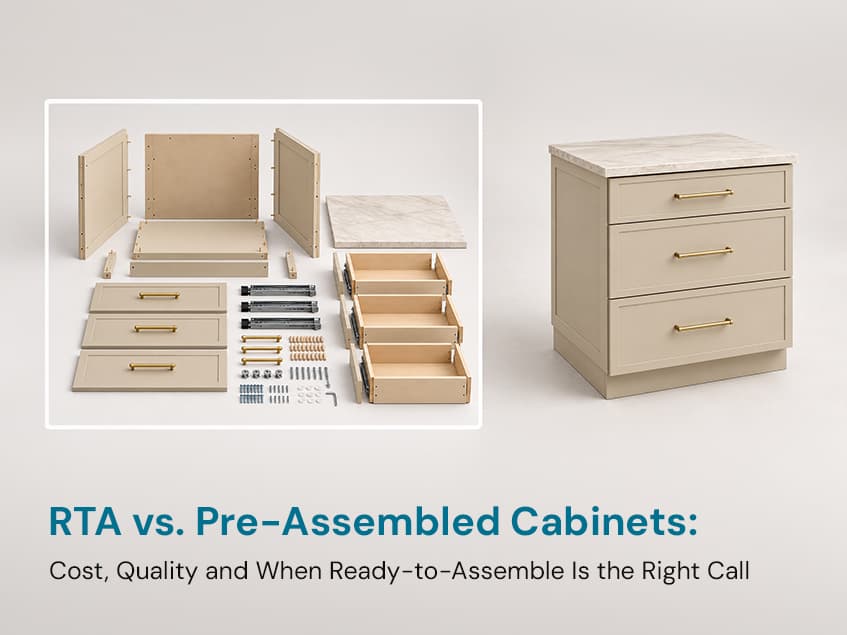 15 October,2026
RTA vs. Pre-Assembled Cabinets: Cost, Quality and When Ready-to-Assemble Is the Right Call
Compare RTA vs. pre-assembled cabinets by cost, quality, and installation time to find the right option for your kitchen remodel or renovation project.
Read More 29 September,2026
What a Kitchen Remodel Really Costs in Cumming, GA - 2026 Budget
2026 kitchen remodel costs in Cumming, GA by kitchen size, plus refacing vs. replacing, Forsyth County permits, lead times and what moves your budget.
Read More