

Budget Planning Guide for Kitchen Cabinets
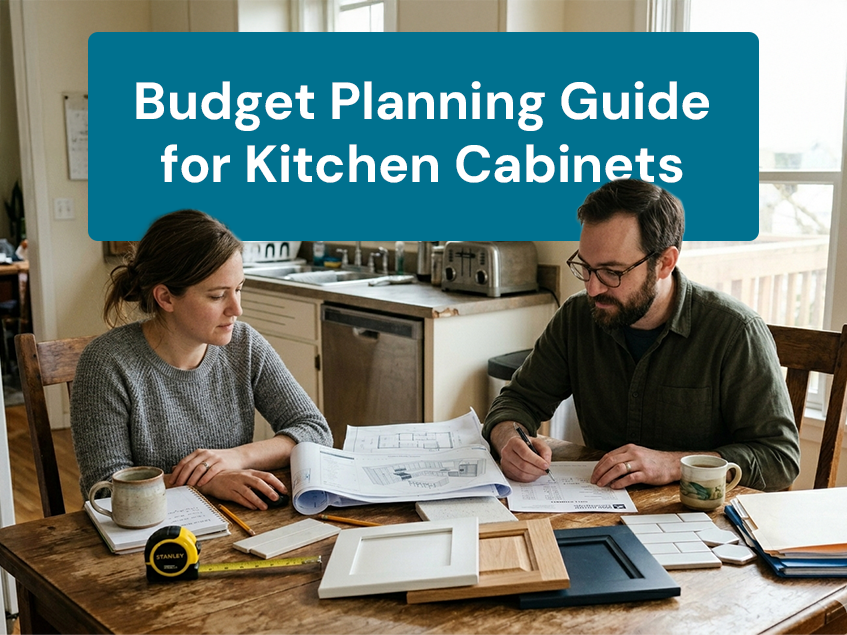
When planning a kitchen renovation, cabinets are often the largest expense. That's why careful budget planning is essential. Without a clear plan, it's easy to overspend on:
- Trendy finishes
- Custom features
- Unexpected fees
A well-thought-out budget helps homeowners and contractors alike make informed choices while ensuring the project stays on track. Several factors influence cabinet costs:
- Material quality
- Kitchen size
- Customization level
- Shipping
- Installation fees
Each choice affects your bottom line differently. By understanding these variables in advance, you can:
- Set a realistic budget
- Optimize your cabinet selection
- Avoid costly surprises
We will walk you through:
- Average cabinet costs
- Key cost drivers
- Types of kitchen cabinets
- Hidden fees
- Strategies for saving money
How Much Do Kitchen Cabinets Cost?
Cabinets account for 30–50% of the total kitchen remodel budget. They range in price depending on:
- Type
- Material
- Customization
Here's an overview:
1. Stock Cabinets
Budget-friendly and pre-made in standard sizes. Best for:
- Smaller projects
- Budget-conscious homeowners
2. RTA Cabinets
Mid-range pricing with good quality and lower shipping costs. Great for:
- DIYers
- Contractors
3. Semi-Custom & Custom Cabinets
Premium pricing for flexibility or full personalization.
- Semi-custom cabinetry let you make certain adjustments
- Custom cabinets fully realize your design vision
Costs also vary based on:
- Kitchen size
- Layout
- Special units
What Impacts Cabinet Costs
1. Cabinet Material
The material affects durability and price:
- Plywood: Durable and moderately priced; resists warping better than MDF.
- MDF: Smooth surface, easy to paint, mid-tier cost.
- Particleboard: Budget-friendly but less durable; prone to moisture damage.
2. Cabinet Construction
Details like dovetail joints, soft-close hardware, and panel thickness add to:
- Longevity
- Cost
Well-constructed cabinets may cost more upfront but save money over time because of reduced repairs.
3. Finishes & Colors
- Painted Cabinets: Smooth, versatile finish; customization increases cost.
- Stained Cabinets: Highlights natural wood grain; medium cost.
Custom finishes can significantly increase costs, especially:
- Unique colors
- Textures
4. Kitchen Size & Layout
More cabinets = higher cost. Special units like pantries, islands, or corner cabinets require additional material and labor, impacting the total budget.
Types of Kitchen Cabinets & Cost Differences
1. Stock Cabinets
Pre-made, ready-to-install, and affordable. Limited sizes and styles make them ideal for standard layouts.
2. RTA Cabinets
Delivered flat pack, often with lower shipping costs, easy to store and transport. Offers a balance of:
- Quality
- Affordability
3. Semi-Custom Cabinets
Allow adjustments in height, depth, or door style, giving more flexibility without full customization.
4. Custom Cabinets
Fully personalized in:
- Size
- Material
- Finish
Highest cost but perfect for:
- Unique layouts
- High-end materials
- Full creative control
Hidden Costs to Consider
Additional fees can significantly impact your budget:
- Shipping & delivery fees
- Installation costs
- Hardware upgrades
- Accessories like:
- Pull-outs
- Organizers
- Removal of old cabinets
- Taxes and unexpected repairs
How to Set a Realistic Cabinet Budget
- Define the total budget
- Allocate a percentage for cabinets
- Prioritize must-haves
- Get multiple quotes
- Add a 10–15% buffer
Ways to Save Money on Kitchen Cabinets
- Pick RTA cabinets
- Stick to standard sizes
- Avoid unnecessary customization
- Mix high-end and budget-friendly elements
- Look for promotions or bulk deals
When to Spend vs. Save
1. Spend More On:
- Cabinet boxes for durability
- High-quality hardware
2. Save On:
- Decorative elements that are purely aesthetic
- Trend-based finishes are likely to go out of style
Cost Breakdown Example
A sample $15,000 cabinet budget might include:
- Cabinets: $9,000
- Hardware: $1,500
- Installation: $3,000
- Accessories & organizers: $1,500
Adjust according to:
- Kitchen size
- Type
- Customization
Budgeting Tips
- Homeowners – Focus on:
- Aesthetics
- Durability
- Long-term value
Plan for 10–15 years of use and pick materials wisely.
- Contractors and Dealers – Prioritize:
- Margins
- Bulk pricing
- Reliable suppliers
Efficient sourcing and quality control ensure:
- Client satisfaction
- Repeat business
Common Budgeting Mistakes to Avoid
- Underestimating total cost
- Ignoring hidden expenses
- Choosing the lowest price over quality
- Not planning for delays or installation issues.
- Skipping research on material, style, and supplier
- Avoiding these pitfalls ensures a smoother renovation experience.
Final Takeaways
Smart budget planning for kitchen cabinets is critical to a successful kitchen renovation. By understanding cabinet types, cost drivers, hidden fees, and strategies for saving money, homeowners and contractors can confidently plan a kitchen that fits:
- Design goals
- Financial limits
Partnering with a trusted supplier like Kade Cabinet Co. ensures value, quality, and a wide range of options, from stock and RTA to semi-custom and fully custom cabinets. Explore all we have to offer today!
FAQs
-
What is a reasonable budget for kitchen cabinets?
30–40% of the total kitchen renovation budget.
-
Are RTA cabinets a good budget option?
Yes, they provide mid-range pricing, good quality, and lower shipping fees.
-
What is the cheapest type of kitchen cabinet?
Stock cabinets and RTA offer the most affordable.
-
How can I reduce cabinet costs?
Stick to standard sizes, minimize customization, pick RTA cabinets, and consider DIY installation.
-
Do cabinet prices include installation?
Not always. You should factor installation into your budget, as it often comes at a separate cost.
Recent Articles
 29 September,2026
What a Kitchen Remodel Really Costs in Cumming, GA - 2026 Budget
2026 kitchen remodel costs in Cumming, GA by kitchen size, plus refacing vs. replacing, Forsyth County permits, lead times and what moves your budget.
Read More 15 September,2026
White Kitchen Cabinets: How to Choose the Right Shade, Finish and Hardware
Learn how to choose white kitchen cabinets by comparing shades, finishes and hardware to create a cohesive, functional kitchen design.
Read More 30 August,2026
Looking for Schrock Cabinets in Georgia? Here's What We Carry Instead
Looking for Schrock Cabinets in Georgia? Explore quality cabinet alternatives, available styles, and options for your next kitchen project.
Read More